






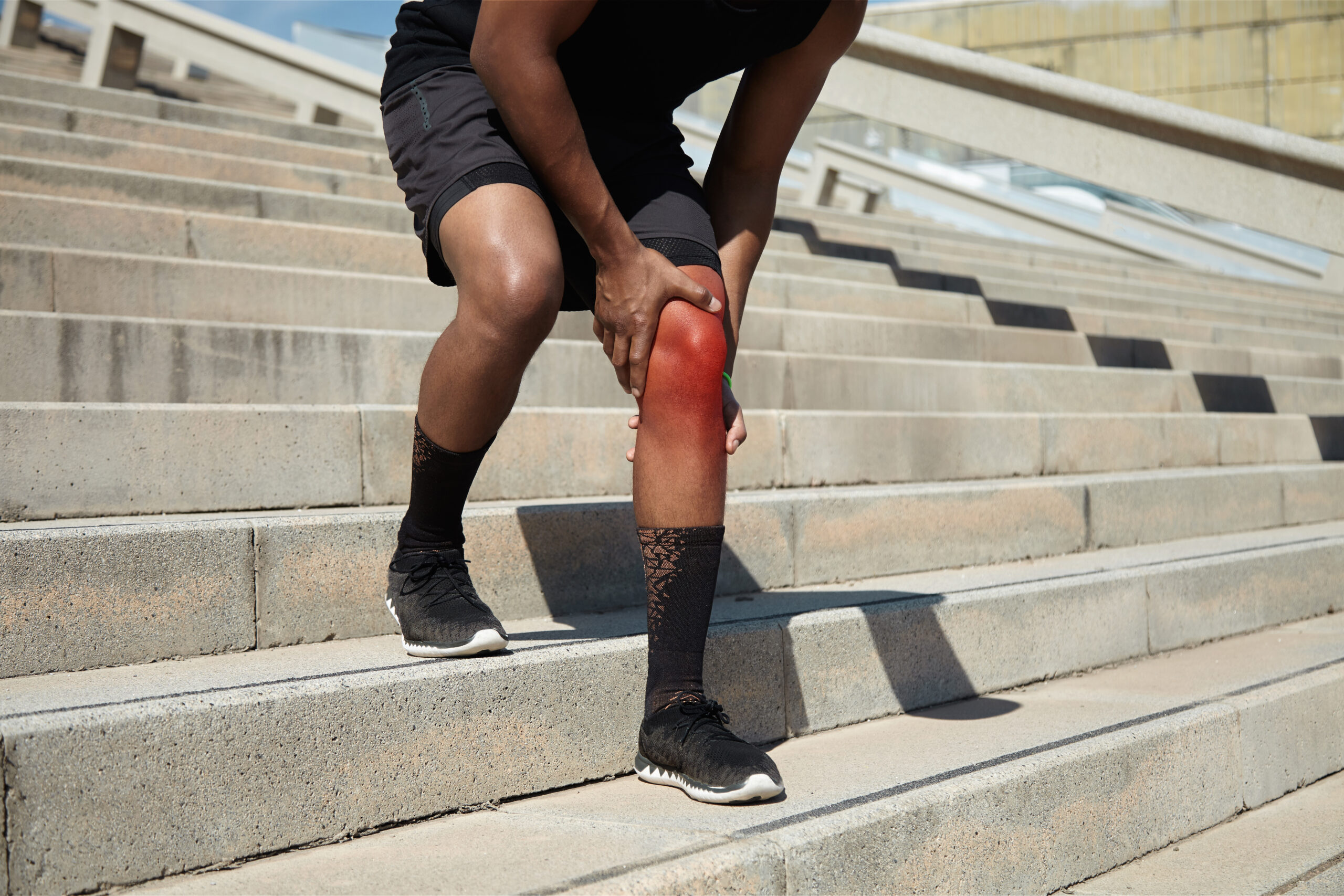
Knee pain during squats, lunges or stairs can make everyday movement frustrating — and it can quickly interfere with gym training, running and sport. The cause is not always obvious, though. Pain around the front of the knee, for example, can have different contributing factors, and the right approach depends on the symptoms, your training history and what an assessment finds.
The good news is that knee pain does not automatically mean you need to stop moving completely. In many cases, adjusting the amount or type of activity and gradually rebuilding strength can help. The key is knowing what to change, what to monitor and when to get the knee assessed.
At Kinetic Sports Chiropractic in Macquarie Park, we look beyond the painful spot alone. We consider how the knee is handling the demands placed on it, alongside the hip, ankle, foot, training load and your goals.
Why does my knee hurt when I squat?
Squatting places load through the knee while it bends. That is normal and necessary for everyday activities and many sports. Pain can occur when the current load, movement demands or recovery are not matching what the knee can comfortably tolerate.
Some common possibilities include:
1. Pain around the front of the knee
Pain around or behind the kneecap that becomes noticeable with squats, stairs, running or prolonged sitting can be consistent with patellofemoral pain. It is not possible to confirm that from the location of pain alone, but the pattern can be a useful clue.
This type of pain may be influenced by several factors, including recent increases in training, strength and capacity, the amount of repeated knee bending, and how much recovery you are getting between sessions.
2. Tendon-related pain
Pain around the patellar tendon — just below the kneecap — may be aggravated by activities that involve jumping, sprinting, landing or repeated loaded knee bending. It can occur in people who play court sports, run, lift weights or suddenly increase their training.
Tendon pain often needs a carefully progressed loading plan rather than simply resting indefinitely or repeatedly pushing through the same symptoms.
3. Irritation after a change in training
Have you recently added more running, increased your squat weights, returned to sport after a break or started a new class? A change in training load can be relevant.
The issue is not necessarily that the exercise is “bad” or that your technique is automatically wrong. It may be that the total demand increased faster than your current capacity could adapt to.
4. Other knee conditions or injuries
Meniscus injuries, ligament injuries, osteoarthritis and other conditions can also cause knee pain. Symptoms overlap, so it is important not to diagnose yourself based on one symptom or an online article.
A sudden twist, a significant impact, marked swelling, locking or the knee giving way may require a more specific assessment.
Why does my knee hurt going up or down stairs?
Stairs repeatedly load the knee while it bends and straightens. Going down stairs can be particularly uncomfortable for some people because the leg muscles must control the body as it lowers onto the next step.
Pain on stairs can occur with patellofemoral pain, tendon problems, osteoarthritis and other knee conditions. The exact cause depends on the wider symptom pattern, not simply whether it hurts going up or down.
Pay attention to a few details:
- Where is the pain — around the kneecap, below it, along the joint line or somewhere else?
- Did it start suddenly after an injury, or build up over time?
- Is there swelling, catching, locking or a feeling that the knee may give way?
- Is it worse after exercise, during exercise or the following morning?
- Has your walking, running, gym or sporting load changed recently?
These details help guide what should be assessed and which activities may need temporary adjustment.
Should you stop squatting if your knee hurts?
Not necessarily. Whether you should continue depends on the severity of pain, the suspected cause and whether there are warning signs that need medical assessment.
For mild, familiar symptoms without significant swelling or instability, it may be reasonable to modify the activity rather than stop all movement. For example:
- Reduce the weight or number of repetitions.
- Use a shallower squat temporarily if deeper bending aggravates symptoms.
- Reduce the number of hard training sessions or jumping drills for a short period.
- Choose a variation that is more comfortable while you work out what the knee can currently tolerate.
- Monitor how the knee feels later that day and the next morning, not just during the set.
These are general ideas, not a personalised treatment plan. If symptoms are worsening, persist despite sensible changes or repeatedly return as you resume training, arrange an assessment.
Avoid treating pain as a test of toughness. Equally, complete rest is not automatically the answer to every knee problem. The aim is to find a level of activity that is appropriate for the condition and then progress it sensibly.
Does knee pain mean your squat technique is wrong?
Not automatically.
Technique can influence how load is distributed, and changes to stance, depth, tempo or exercise selection may make a movement more comfortable for some people. But there is no single perfect squat position that suits every body, sport and goal.
A useful assessment looks at the whole situation:
- What happens during the movement that brings on symptoms?
- How much load and volume are you doing?
- What has changed in the past few weeks?
- How does your knee respond to other tasks, such as stairs, running or jumping?
- What strength, mobility or control factors are relevant to your specific presentation?
The goal is not to force everyone into the same technique. It is to understand what your knee currently tolerates and what changes are likely to help you return to the activities that matter to you.
Why we look beyond the knee itself
At Kinetic, we do not assume every knee problem is caused by the knee alone — but we also do not assume that pain in one area must be caused by another area.
The knee works as part of a larger system. Depending on the person and the problem, an assessment may consider the hip, ankle and foot, how you move, your strength and coordination, previous injuries, and the demands of your training or work.
For a runner, that might mean looking at running volume, speed sessions, hills and recovery. For someone who lifts weights, it might mean reviewing squat depth, loading, weekly volume and the other exercises in the programme. For someone whose knee hurts on stairs, the assessment may focus on daily function as well as strength and movement tolerance.
This whole-body approach does not mean every part of the body needs treatment. It means looking for the factors that are actually relevant, rather than automatically treating only the spot that hurts or assuming one explanation fits everyone.
What can help knee pain improve?
Management depends on the cause, severity and your goals. A sensible plan may include a combination of the following.
Adjusting the load
Temporarily changing training volume, intensity or exercise selection can help keep activity within a tolerable range. The aim is usually to find a workable balance between doing too much and doing so little that you lose useful capacity.
Building strength and capacity
Exercise is an important part of managing many knee problems, including knee osteoarthritis. The exercises and progression should match the individual and the diagnosis. Depending on the assessment, a programme may include strengthening around the knee and hip, balance or control work, and gradual practice of the activities you need to return to.
Progressing back to normal activity
When symptoms settle, increase the demand gradually rather than jumping straight back to your previous training volume. Track how the knee responds to the combined demands of sport, gym sessions, work and everyday activity.
Getting the right assessment
If you are unsure what is causing the pain, if it keeps returning, or if it is limiting your normal activities, a qualified health professional can assess the problem and advise whether further investigation or referral is needed. Treatment should be guided by the findings, not by a promise that one technique will fix every knee.
Australian guidance for knee osteoarthritis emphasises individualised care, self-management and appropriate physical activity. Exercise can be adapted to the person and their symptoms rather than automatically avoided.
When should you get knee pain checked urgently?
Seek urgent medical care if you have severe pain after a significant injury, a visibly deformed knee, major or rapidly developing swelling, cannot bear weight, or the knee is locked and you cannot move it normally. A hot, red knee with fever or feeling unwell also needs prompt medical assessment.
Arrange a timely assessment for persistent pain, recurrent swelling, repeated giving-way, or symptoms that are stopping you from walking, working, sleeping or exercising normally. If you are uncertain about the seriousness of an injury, err on the side of getting medical advice.
Knee pain in Macquarie Park: how Kinetic can help
You do not need to be an elite athlete to benefit from a proper assessment of knee pain. We work with gym-goers, runners, weekend athletes and people who simply want stairs and everyday movement to feel easier.
At Kinetic Sports Chiropractic in Macquarie Park, we assess your symptoms and movement in context, discuss what you want to get back to, and explain the options that may be appropriate. Depending on the findings, care may involve hands-on treatment, exercise-based rehabilitation, activity modification or referral to another health professional when needed.
We also treat more than back and neck pain. Knee, shoulder, foot and toe problems can all affect how you train and move, and they deserve an assessment that considers your actual presentation rather than a one-size-fits-all approach.
If knee pain is interfering with your squats, stairs, running or sport, contact Kinetic Sports Chiropractic to discuss whether an assessment is appropriate.
The takeaway
Knee pain during squats or on stairs can have several causes, so the most useful next step is to understand the pattern rather than guess. You may not need to stop all activity, but you may need to adjust the load, build capacity progressively or get the knee assessed.
If the pain is severe, follows a significant injury or comes with major swelling, locking, instability or difficulty bearing weight, seek appropriate medical care. For ongoing or recurring symptoms, a tailored assessment can help you work out what to do next.